Originally constructed as a 16-unit, two-storey accommodation block housing one to two staff per unit, this building created a fragmented and disconnected working environment that no longer reflected the collaborative values of Te Wānanga o Aotearoa. Rather than demolish the structure, Te Wānanga o Aotearoa chose to embrace a more environmentally conscious approach by retaining and repurposing the existing building — one of the project’s most significant sustainable decisions. Confident that the structure could be successfully transformed, APG Architects undertook a comprehensive renovation that reimagined the building as a connected and welcoming workplace.
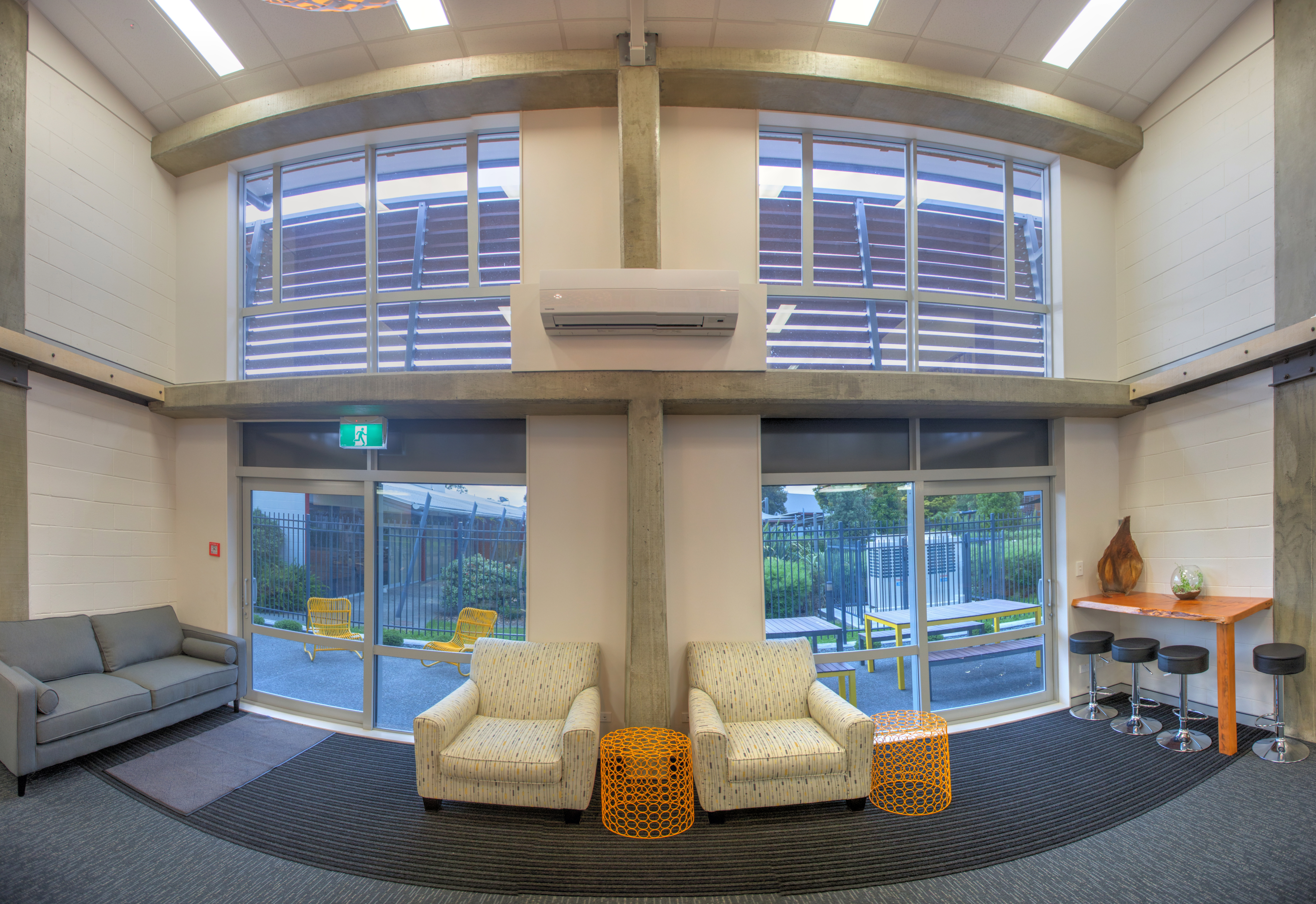
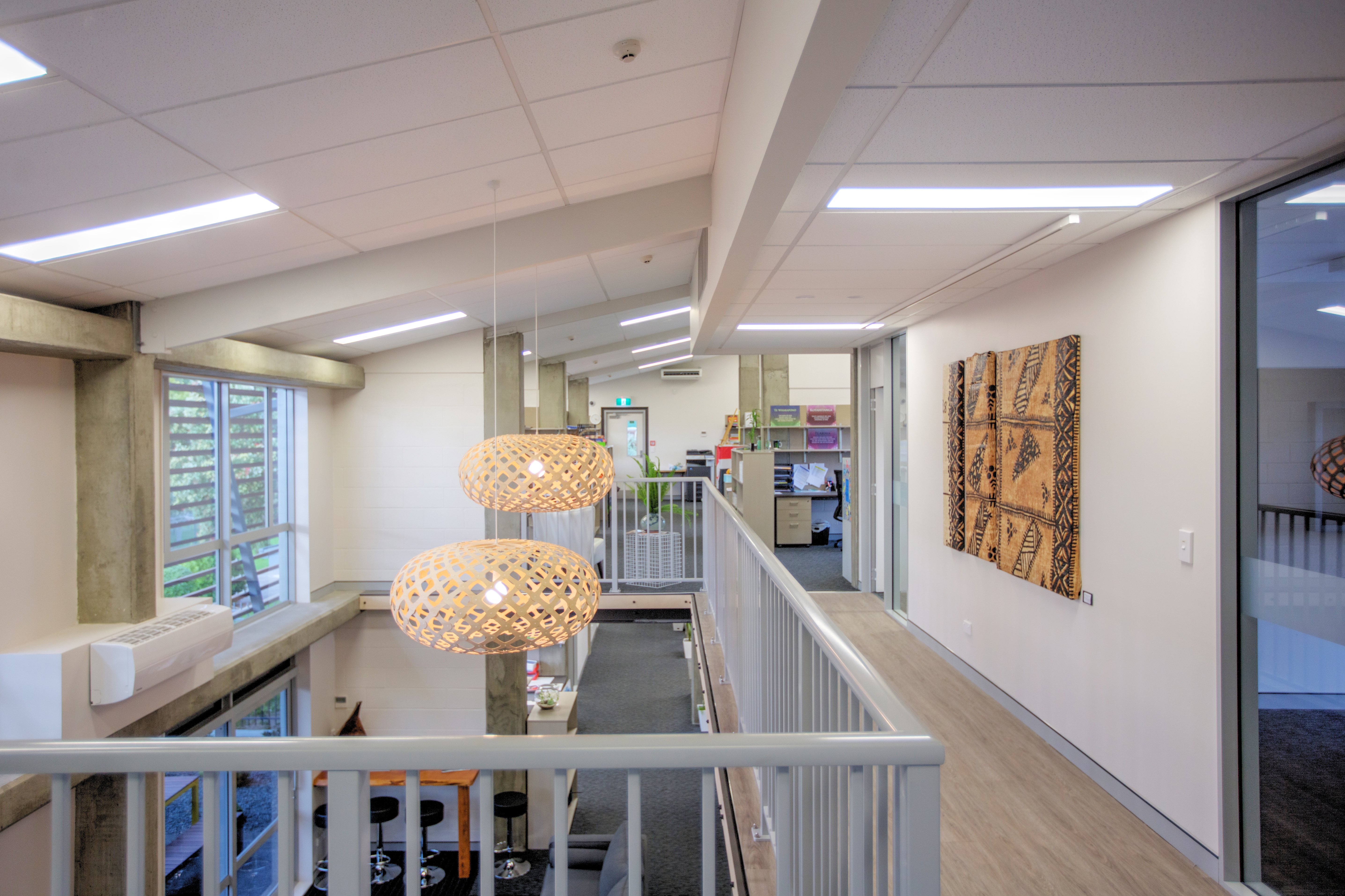
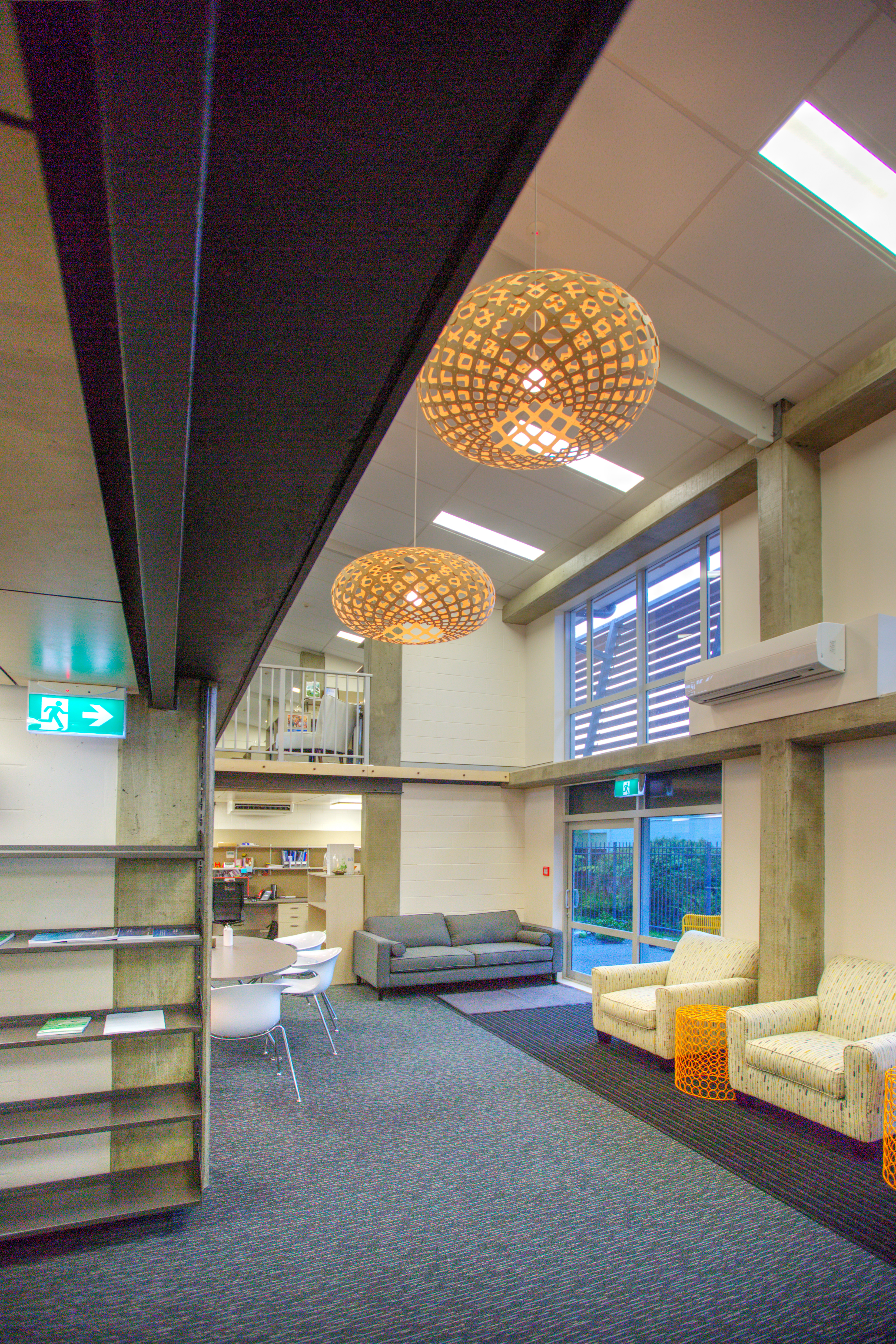
The redevelopment was driven by two strong architectural moves. A continuous horizontal opening carved through the length of the building created interconnected office bays and collaborative working spaces, while a dramatic vertical opening through the centre of the building removed portions of the first floor to form a generous shared social and breakout space connecting both levels visually and spatially. This simple yet effective intervention transformed the previously cellular layout into an open and engaging environment that encourages interaction and connection.
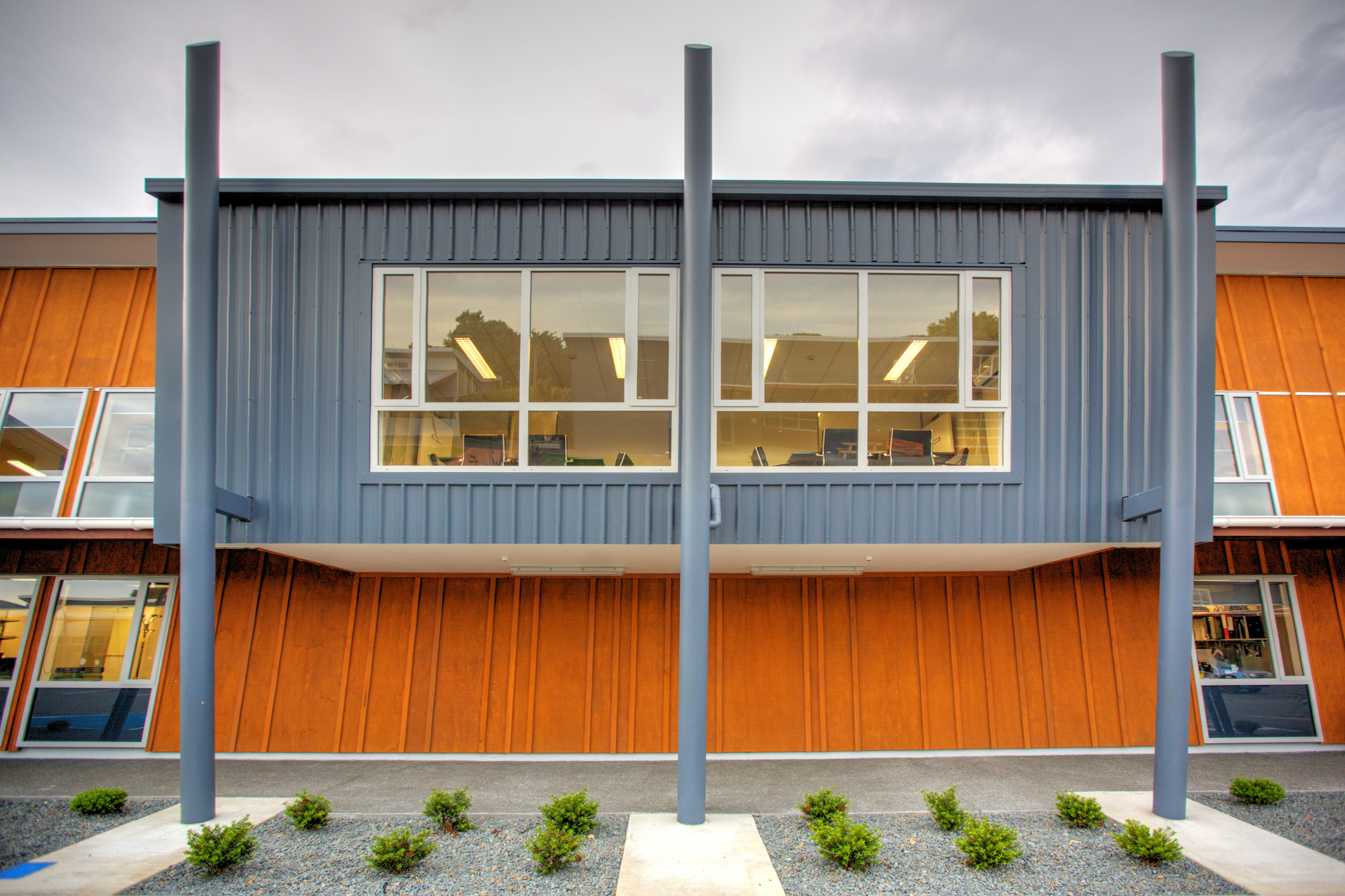
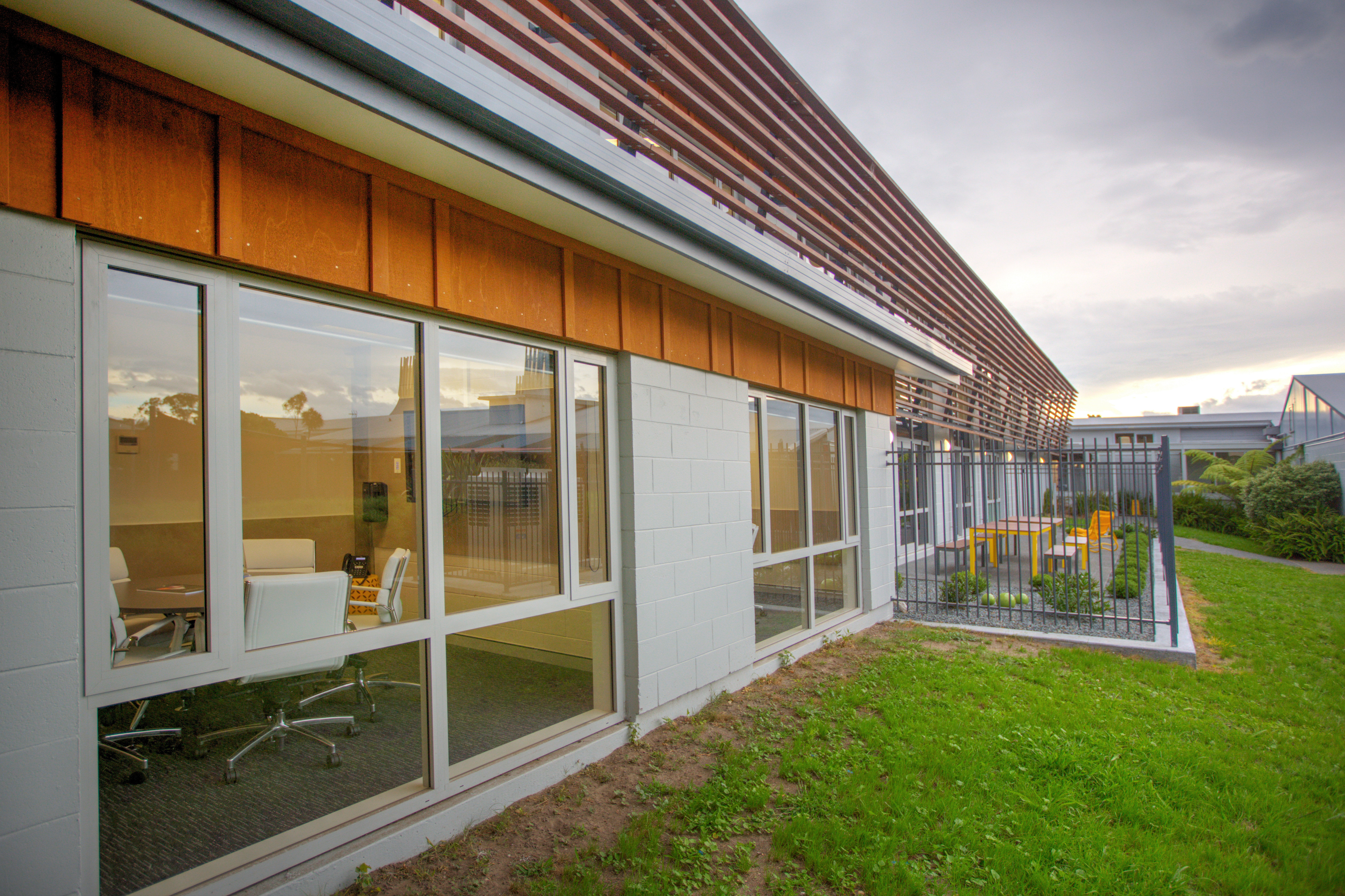
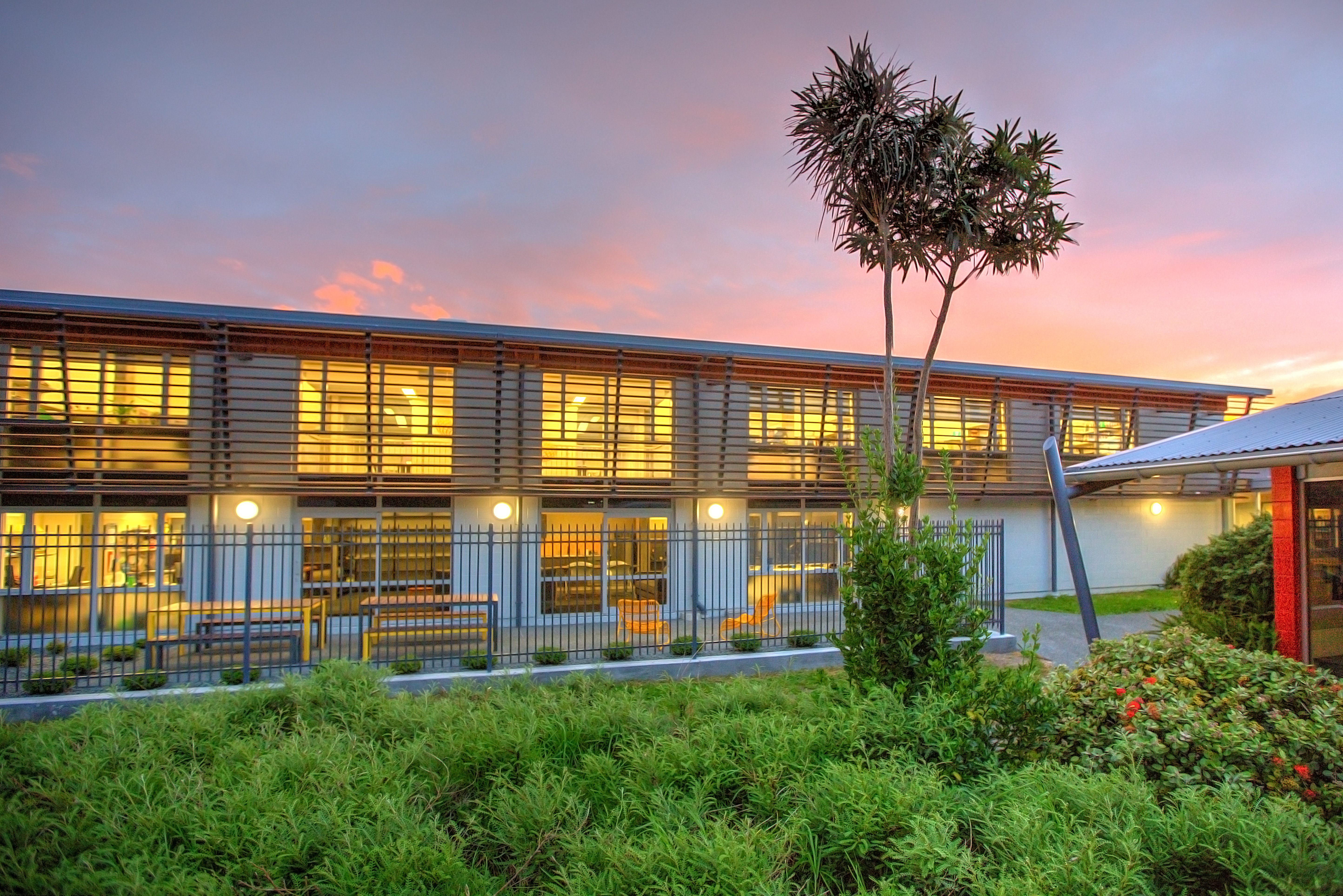
Externally, the original minimalist concrete block form was stripped back and re-clad to better relate to the contemporary campus environment. Angled covered walkways, extended eaves, and cedar louvres were introduced to soften the building and strengthen links to neighbouring structures. A cantilevered first-floor meeting pod provides articulation to the rear elevation and adds visual interest to the otherwise linear form.
Internally, care was taken to celebrate both the old and the new. Existing concrete blockwork, exposed steel, and structural scars from the renovation process were intentionally retained and expressed alongside natural timber finishes and a soft material palette. Discreetly integrated building services and carefully considered detailing contribute to a calm, functional, and welcoming workplace.
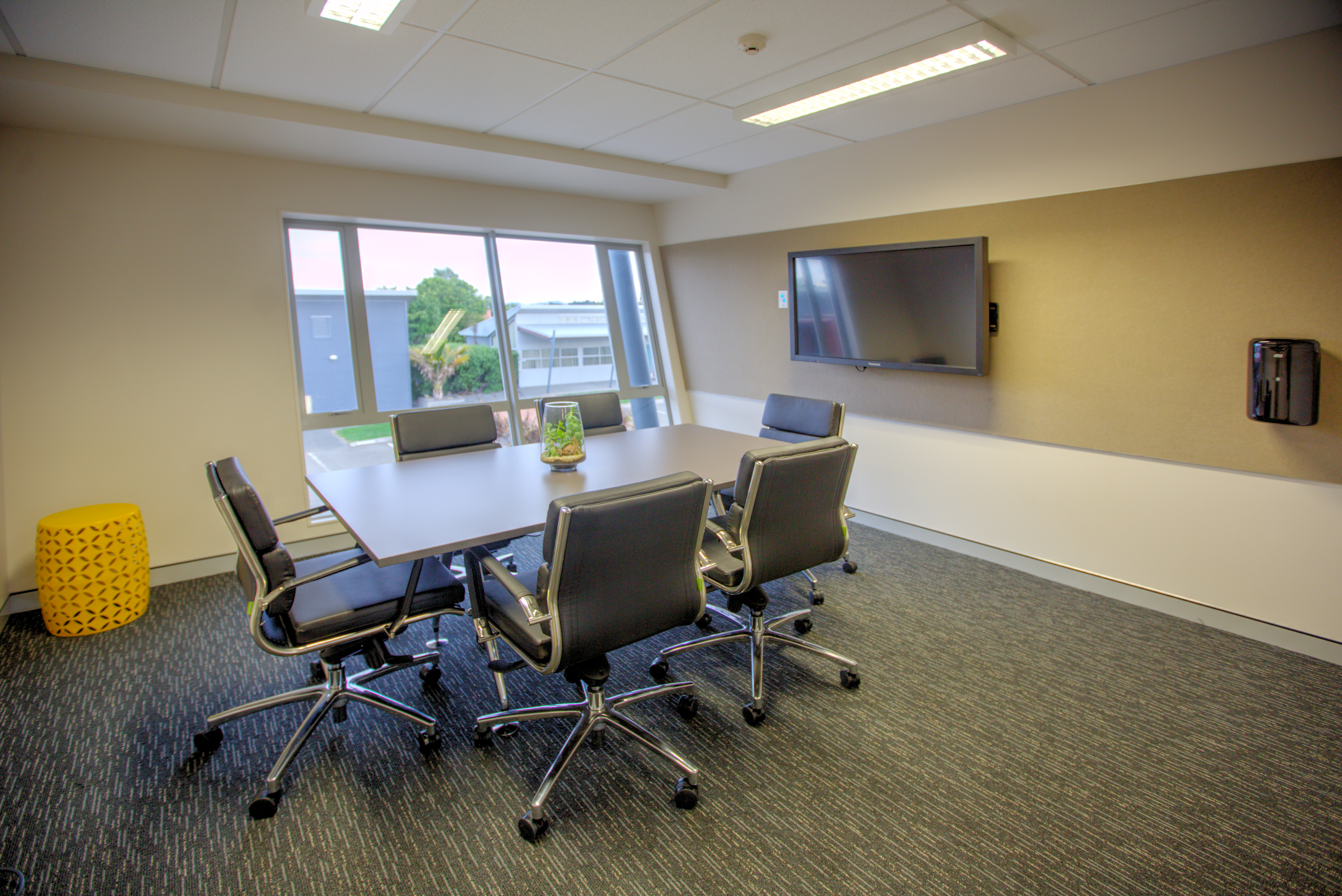
The interior palette was further enriched through the thoughtful use of colour, inspired by a mature kōwhai tree located outside the central social space. Bright yellow highlights contrast against retained concrete, painted blockwork, and plywood linings, creating a vibrant and elegant interior environment that feels both contemporary and connected to place.
The project received an NZIA Waikato/Bay of Plenty Architecture Award in the Education category, where the jury commended the commitment to adaptive reuse, the simplicity of the architectural solution, and the successful integration of the building within the wider campus environment. The project also received a Resene Colour Award for its thoughtful use of colour and materiality, celebrating the balance between retained raw elements and vibrant contemporary interventions.